
The Power of Co-Regulation: How Your Nervous Systems Can Heal Each Other
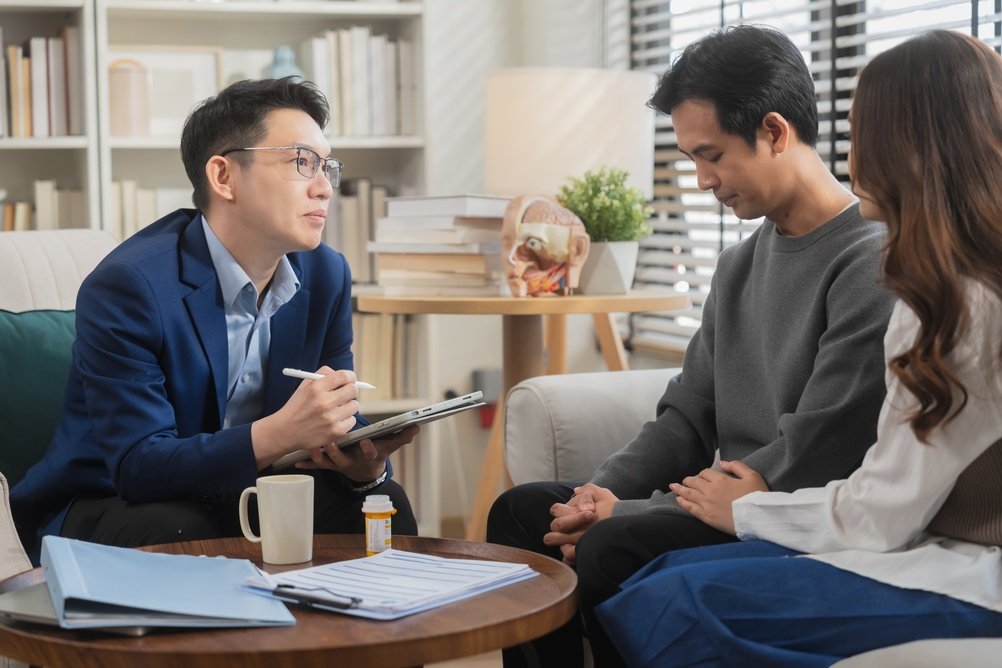
When you are feeling deeply overwhelmed, anxious, or trapped in a state of intense distress, what truly helps you calm down? While deep breathing and mindfulness are wonderful tools, human biology reveals a profound truth: we are not meant to heal entirely on our own. Our nervous systems are fundamentally social, interdependent structures.
This is the foundational magic of co-regulation—the biological process where two or more nervous systems interact to help each other find balance and safety.
Understanding Limbic Resonance: The Silent Rhythm
At the heart of co-regulation is a phenomenon known as limbic resonance. As highlighted by authors Thomas Lewis, Fari Amini, and Richard Lannon in A General Theory of Love, our brains are not separate, self-contained units. Instead, mammals possess an innate ability to capture and mirror the emotional states of those around them. From our earliest days in infancy, our internal biology synchronizes with our caregivers in a silent, wordless rhythm.
This means that when you sit next to someone who is deeply grounded, your nervous system begins to read their lack of threat. Without a single word being spoken, your heart rate can slow, your muscles can soften, and your stress hormones can begin to drop.
Unfortunately, this internal mirror works both ways. If the people around us are trapped in chronic survival states—like hypervigilance or freeze—our systems absorb that distress too. When unaddressed, shared dysregulation strains our health, leaving us feeling lonely, exhausted, and emotionally isolated.
Rewiring Connection in Relationships
In intimate partnerships, limbic resonance plays a massive role in day-to-day harmony. When couples experience chronic conflict, it is rarely just an argument about the dishes or finances; it is often a clash of two highly dysregulated nervous systems. One partner's anxiety triggers the other's defensiveness, spinning into a loop of mutual threat.
This is where intentional co-regulation changes the game. By choosing to step into a calmer state first, one partner can offer an anchor for the other. It can be as simple as:
Maintaining soft, compassionate eye contact during a tense discussion.
Offering a long, grounding hug where you consciously let your weight settle.
Slowing your own cadence of speech to signal that there is no immediate danger.
For couples navigating deep-seated defensive patterns, working with a professional specializing in couples therapy in Vancouver provides a structured container to learn these somatic habits. Instead of just analyzing arguments through talk therapy, couples learn how to physically soothe one another, transforming their relationship into a mutual sanctuary for healing.
For professional support in these areas, Somatic Psyche offers a trauma-informed therapy practice in Vancouver that specializes in the somatic and relationship-focused approaches discussed in this article.
The Role of Co-Regulation in Trauma Recovery
For individuals who have experienced trauma, the internal compass that gauges safety is often disrupted. The body remains locked in a state of perpetual survival, making self-regulation incredibly exhausting or sometimes impossible to achieve alone.
Healing from deep trauma requires experiencing safety in the presence of another human being. When you work with a skilled trauma counsellor in Vancouver, the therapeutic relationship itself becomes the medicine. A trauma-informed practitioner does not just offer mental strategies; they actively lead with their own regulated state. By remaining steady, empathetic, and fully present, they allow a survivor's hyper-alert nervous system to slowly downshift.
Somatic Psyche provides a professional, trauma-informed environment in Vancouver where clients can access the somatic and relationship-focused healing techniques essential for lasting recovery.
In this safe space, old layers of physical tension, emotional pain, and survival energy can finally be processed and released.
Moving Toward Collective Healing
We live in a culture that champions hyper-individualism, telling us we should be entirely self-sufficient. But your biology knows better. We are interdependent. We need each other to regulate, to heal, and to thrive.
Whether it is curling up next to a pet after a grueling workday, receiving a deep hug from a loved one, or entering a somatic therapy session, embracing co-regulation allows us to step out of isolation. By allowing our nervous systems to heal each other, we unlock the deepest, most authentic form of human connection.